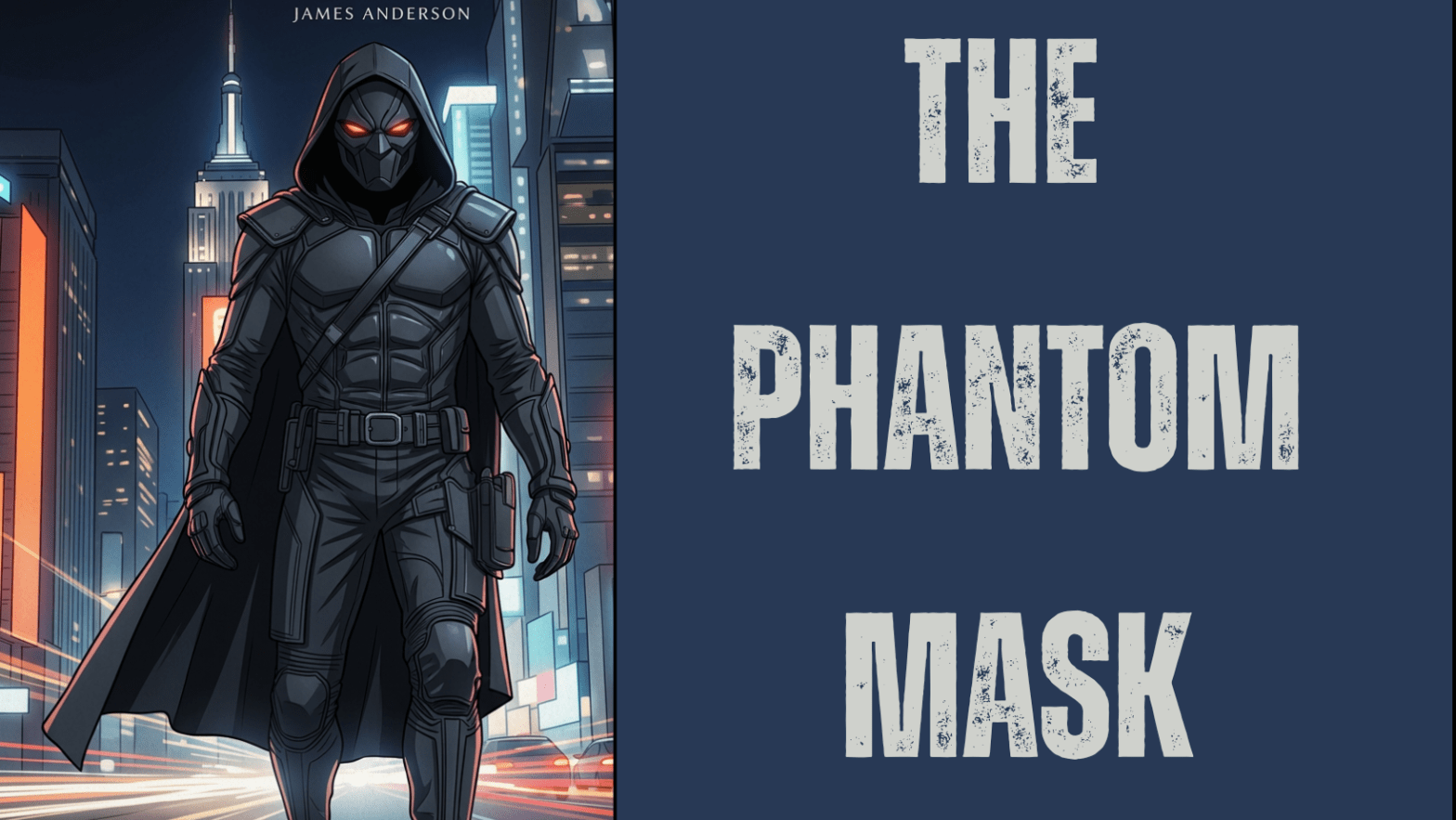
The opening of a book is its most critical component, serving as the gateway to the narrative world. This is why I strategically introduced the beginnings of “The Phantom Mask” in my previous work, utilizing a technique similar to a cinematic end stinger or post-credits scene to bridge the transition between stories. It poses a haunting question to the reader: the world appears to have returned to normalcy, but has it truly?
In the modern landscape of content creation, there is a prevailing understanding that you must hook a viewer within the first 3-5 seconds to ensure retention. The same principle applies to literature; the first chapter, or even the first few pages, must immediately seize the reader’s attention.
The same can be said for books or prose.
Like with blockbusters, James Bond for example, the opening scene is an exciting car chase through the mountains of Italy. He’s on the backfoot the whole time in his Aston Martin. There’s cars and trucks ahead of him on the road, both in the lane he’s in and in the opposite direction. The bad guys are close behind and they’re shooting at him. The beautiful Aston Martin is getting smashed and shot at. Dodges a truck! And a car! He shoots a car of bad guys and it careens off the road and down a mountain side. One car left. Another truck, honking its horn for dramatic effect. A door gets ripped off the Aston Martin. Gunshots. Oncoming cars. Bond can’t get to his other gun. Except he does and BANG!
Shoots the last bad guy who also flies off the mountain road, and Bond drives to his destination in peace.
An added comedy bit, he drives through a city in an Aston Martin that looks more like a colander than a car and a door mission.
Another added comedy bit, he had someone in the boot of the car the whole time.
Ultimately not a great Bond movie (there are certainly worse) but that opening scene grabs you instantly.
And, whenever I think of an opening scene for a book or movie that’s instantly what I think of.
The narrative opening must align seamlessly with the overarching tone of the book, show, or movie. As a noir thriller punctuated by occasional action beats, “The Phantom Mask” relies heavily on establishing a specific atmosphere from the very first page. Central to this tension is the protagonist’s inherent mystery; by keeping their identity and motives obscured, the story cultivates a sense of unease and intrigue that drives the reader forward.
The story commences in the shroud of night within a historical, abandoned building situated along the banks of the River Thames in East London. A shadowy, unidentified figure, whose gender and identity are deliberately withheld, infiltrates the structure to begin a methodical transformation of the space. Their actions are precise and purposeful: they dismantle old beer brewing vats, melting the salvaged metal to forge an arsenal of knives, arrowheads, and various other weaponry. This sequence not only builds the physical environment but also serves as a character study, detailing the arrival of vehicles and sophisticated computer equipment as a new lair begins to take shape.
This slow, deliberate process mirrors the character’s own methodical nature, culminating in a final scene where The Phantom Mask stands atop the rooftop of their new sanctuary, surveying the city of London below.
From this we can identify several things;
- This is set in the same world as my previous work (but not necessary to reading this)
- This is going to be the base of operations for the main protagonist
- They’re methodical
- They’re violent
- They’re setting themselves up to become a vigilante
- It’s set in London
- And this is the new watchful guardian of London
If the first chapter serves as the “teaser” to hook the audience, the second chapter acts as the “convincer,” designed to demonstrate the true lengths to which The Phantom Mask will go. This second phase solidifies the reader’s understanding of the character’s physical capabilities and moral boundaries. The sequence begins with a high-stakes stalking through the labyrinthine, claustrophobic streets of East London, showcasing the protagonist’s elite navigation skills.
The second chapter serves as the “convincer,” designed to solidify the reader’s understanding of The Phantom Mask’s capabilities and moral compass. This sequence begins with a high-stakes stalking through the labyrinthine streets of East London, transitioning into a frantic foot chase that utilizes the urban environment to showcase the protagonist”s superior physical conditioning and navigation skills.
The pursuit culminates in a quick, almost surgical attack. This isn”t a mindless brawl; it is a display of calculated efficiency where the prey is neutralized with professional precision. The narrative then reveals the justification for this violence: the target is an ex-policeman who exploited his position of authority to evade justice for previous crimes. By focusing on a corrupt officer, the story establishes The Phantom Mask as a figure who operates where the legal system fails.
Furthermore, the chapter emphasizes the intellectual threat posed by this mysterious figure. Evidence is presented to the target and the reader, revealing that an immense amount of research and reconnaissance preceded the strike. This confirms the character”s methodical nature previously hinted at in the lair construction. The scene concludes with a symbolic gesture of accountability: the beaten and bloodied criminal is dropped at the feet of a specific detective. This encounter suggests that the detectives themselves may be under the watchful, analytical eye of The Phantom Mask, setting up a complex dynamic between the vigilante and the official police force.
The shadows of London are shifting, and the line between a necessary vigilante and an agent of chaos has never been thinner. For more updates, be sure to follow me on Instagram.
As The Phantom Mask continues to challenge the corruption gripping our city, I have to ask: at what point does the pursuit of justice become the very thing it’s fighting? Is our masked operative a hero or a hazard? I’d love to hear your take on the Phantom Mask saga—drop your theories in the comments. Are you team vigilante, or do you think the system deserves another chance? Let’s keep this thriller of a conversation going.
Discover more from That Jamie Bloke
Subscribe to get the latest posts sent to your email.

