
A Noir Whodunnit | A Different Type of Mystery
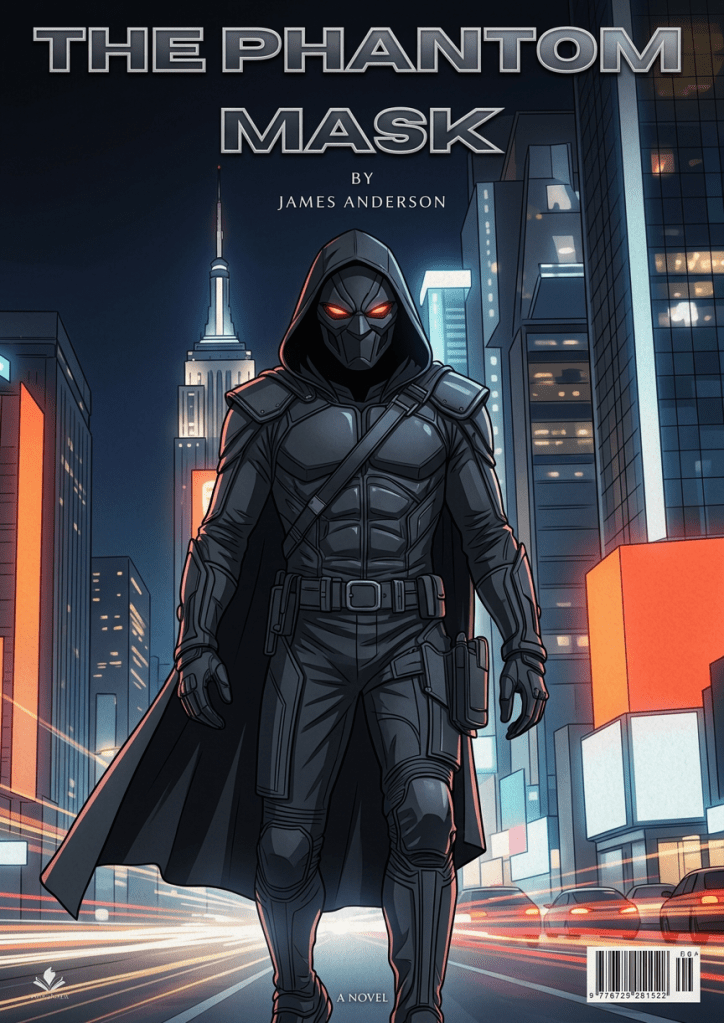
A mysterious vigilante, ‘The Phantom Mask,’ emerges in London, delivering brutal but targeted justice against known abusers and harassers. This immediately divides the city: victims who feel failed by the system hail The Mask as a hero, while the powerful elite, epitomized by influential lobbyist Julian Vane, see the figure as a dangerous societal threat.
Drafting Status:
[|||||||||………] 45% Complete
Character introductions made, world built, inciting incident taken place, panic escalating.
The oppressive January night draped London in a mantle of dark, bone-chilling cold. The fleeting gaiety of the New Year’s celebrations had long dissipated, leaving behind a dull residue of routine and resignation as the populace returned to the monotonous rhythm of their ordinary, unremarkable lives. It was as if the city, and indeed the world, had settled back into a predictable hum, completely untouched by the potential for profound, lasting change.
Far out on the fringes of East London, hugging the muddy, desolate banks of the river Thames, stood a skeletal, abandoned warehouse. It was a cavernous structure, once the proud, bustling heart of a celebrated local brewery, its brickwork and steel frames echoing with the phantom clamour of industry. That was before the artisanal revolution, before the wave of self-proclaimed ‘hipsters’ began brewing their own trendy, small-batch IPAs and esoteric ales, rendering the old operation obsolete. Following its closure, the building had tragically found a new, nefarious purpose, becoming an illicit factory for the highly volatile explosive mixture used in the horrific 5th of November attacks the previous year. The attacks were a stark, terrifying moment in the city’s recent history, attributed by official reports to a small, localised terrorist cell. The police had swiftly declared the group ‘dismantled’ in the ensuing days. Yet, for those privy to the whispered truths of the underworld, the official narrative felt brittle, incomplete. The persistent rumour suggested a far darker end: a night of deadly internal conflict, with the cell destroying itself before the authorities were even aware of its existence, or could intervene. The truth, veiled in shadow and speculation, remained an open wound. Only the passage of time, and perhaps a deep dive into the archives of the clandestine, would truly reveal what transpired.
The warehouse itself was a testament to official indifference. Strewn haphazardly across the front were long, sagging lines of “CAUTION – POLICE – DO NOT CROSS” tape—a clear, faded boundary that spoke not of an active investigation, but of an area cordoned off and forgotten. The police, it seemed, had washed their hands of this dark, dingy monument to past violence.
Into this silence, in the deepest hour before dawn, a white 3.5 tonne commercial truck lumbered to a halt. The vehicle’s engine cut out, and the stillness returned, heavy and absolute. A solitary figure, cloaked entirely in black—a deliberate void against the pale industrial landscape—emerged from the driver’s side. Reaching back into the cab, the figure retrieved a pair of heavy-duty bolt croppers before silently closing the door. They moved with an almost practiced economy of motion, heading straight for the building’s nearest entrance. The tattered, sun-bleached police tape was torn away with a single, dismissive sweep.
 That Jamie Bloke
You must be logged in to post a comment.